How does a solo player survive in Rust when building right next to Oil Rig?
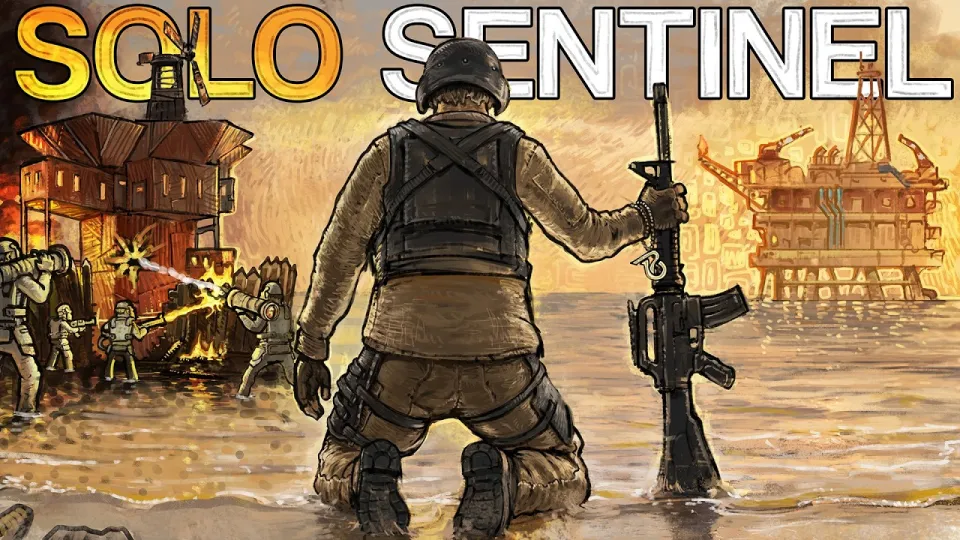
Video: The Solo Sentinel - Rust
Want articles like this for your own video to promote it on YouTube and Google? Order them through the Telegram bot @sat_sit_bot. The bot writes and publishes the articles itself (with your YouTube video embedded) on popular topical websites (no ads). Your first 50 articles are free.
Key takeaways
- Blooprint's solo run is built around a base placed directly next to Oil Rig, one of the most contested monuments in Rust.
- The run starts on a fresh wipe and relies on snowballing gear from early fights instead of farming T2 and T3 monuments for hours.
- The base design uses underwater approaches, so attackers arriving by boat or on foot get surprised from below.
- Defense depends on turrets, upgraded doors and sealed loot rooms rather than on numbers.
- The run ends with a rocket raid on the base, showing how much pressure a solo base next to a monument attracts.
A solo player survives in Rust next to Oil Rig by treating the monument as a trap rather than a farm: Blooprint builds his base within sight of the rig, snowballs gear from the players who come to contest it, and defends with turrets, upgraded doors and a layout that lets him attack from underwater. The result is a wipe where a single player holds ground that usually belongs to clans. You can follow the same runs live on Blooprint's Twitch channel, where the full sessions are streamed before they are edited.
Why build a solo base next to Oil Rig in Rust
Oil Rig is one of the richest monuments in Rust, and that is exactly why a solo base there is both a huge risk and a huge opportunity. The rig drops military crates, heavy scientists and high-tier loot, and every group on the server wants a piece of it. A base built on the shore facing the rig sits in the middle of that traffic.
The advantage is information and timing. From a base next to the monument you hear boats, see groups loading up, and know when a team is deep inside the rig with no easy way out. Instead of farming for hours to reach T2 and T3 gear, a solo can take finished kits from players who are already carrying them. That is the snowball logic the run is built on: every fight you win funds the next one, and the base gives you a place to fall back to when it goes wrong.
How the solo snowball works on a fresh wipe
The first hours of a wipe decide whether the Oil Rig base is viable at all, so the early game is about speed rather than comfort. The core steps look like this:
- Land near the monument, not on it. A small starter base close to the coast gives you a respawn point and a place to store the first kits.
- Craft the essentials immediately: a codelock, a furnace and a workbench come before any comfort items.
- Contest the rig early, when groups are still running primitive gear and the loot inside is worth more than the risk.
- Convert every win into base progress: doors, then turrets, then a second layer of walls.
- Keep the loot spread out. A solo base that stores everything in one room is one rocket away from a full reset.
This is also why solo content resonates with viewers: the progression is visible and earned, and the setbacks are real. A group can lose a fight and regear from a clan stash; a solo has to rebuild from a box of stone and a borrowed gun.
Base design and defense against groups
The base layout is the real weapon in this run. Because the entrance and the loot rooms sit below the shoreline, attackers who arrive by boat or swim toward the rig can be engaged from angles they do not expect. Players who try to raid the base often find themselves fighting someone coming up from under the water rather than through the front door.
Practical defense elements that make this work:
- Turrets covering the water approach and the open ground toward the monument, so a raid cannot be set up in peace.
- Sealed loot rooms in every section of the base, so a single breach does not expose the whole stash.
- Multiple exit routes, which let the defender choose the fight instead of being pinned inside.
- Upgraded doors and honeycomb on the side facing the rig, where most of the pressure arrives.
The trade-off is that a base this visible attracts attention constantly. A solo next to Oil Rig is never really offline-safe, and the run shows how often the defense has to happen at absurd hours, with attackers arriving while the owner is still upgrading walls.
What a rocket raid on a solo base actually looks like
The run ends with a rocket raid, which is the honest test of any solo design. A group that decides to spend explosives on a solo base usually brings enough to go through several doors, and the defender has to make every rocket as expensive as possible. Turrets force attackers to waste explosives on them first; sealed rooms mean the raid has to keep going deeper; and the underwater route lets the defender re-enter the fight from outside the breach.
Even when the base falls, the raid is the point. Every rocket fired at a solo base is a rocket not spent on a clan, and the loot that survives in a sealed room is the difference between a wipe-ending loss and a temporary setback. The footage makes clear that losing a base next to a monument is normal; what matters is how much the attackers had to pay for it.
Common questions and doubts from viewers
Solo versus group content is the recurring debate around this video, and the comments explain why. Many viewers say they only watch solo runs because a single creator narrates every decision out loud, and that play-by-play thinking is more useful than listening to team comms. Others point out that the most memorable moments in Rust come from temporary alliances, the random players you meet on the beach or at the rig, not from a fixed roster.
There is also a practical question underneath: is a base next to Oil Rig actually a good idea for an average solo? The honest answer is that it is a high-variance strategy. It rewards players who can win early fights and read monument traffic, and it punishes anyone who needs quiet farming time. For players who prefer a calmer wipe, a cave base or a remote coastal spot will produce better results.
All links from the video
- Twitch: https://www.twitch.tv/blooprint
- Kick: https://kick.com/blooprint
- TikTok: https://www.tiktok.com/@blooprintgames
- Twitter: https://twitter.com/blooprintgames
- Discord: https://discord.gg/blooprint
Final thoughts on the Solo Sentinel run
The Solo Sentinel is a clear demonstration that location is a strategy in Rust, not just a preference: a solo who builds next to Oil Rig is choosing constant pressure in exchange for constant loot. Blooprint's breakdown shows the whole arc, from a fresh-wipe snowball to turrets, sealed rooms and a rocket raid that tests the design under real explosives. The channel is worth following for this style of narrative solo content, where the thinking is explained as it happens instead of compressed into highlights. If you want to see the next run unfold without the edit, join the live sessions on Twitch.
Source: The Solo Sentinel - Rust · Markdown version
Questions & answers
Is it worth building a solo base next to Oil Rig in Rust?
It is worth it if you can win early fights and want high-tier loot without farming monuments for hours. The rig brings a constant stream of geared players, so the base pays for itself quickly when you snowball. If you prefer quiet progression, a remote or cave base is safer.
How do you defend a solo base against a group with rockets?
Make every rocket expensive: turrets outside the core, honeycomb on the exposed side, and loot split into sealed rooms so one breach does not expose everything. Keep a second exit, ideally one that lets you re-enter from an unexpected angle such as the water. Even a lost base should cost the attackers more than the loot is worth.
Why do viewers prefer solo Rust videos over group content?
Solo videos let the creator explain every decision directly to the audience, which makes the gameplay easier to follow and learn from. Group videos switch to team comms, and that play-by-play thinking disappears. Solo runs also make setbacks more relatable, because there is no clan stash to fall back on.
What gear progression should a solo aim for on a fresh wipe?
Prioritize a codelock, furnace and workbench first, then contest a nearby monument while other players are still in primitive gear. Convert every won fight into base upgrades, starting with doors and then turrets. Spreading loot across several rooms protects the run from a single raid.